 扫码点读
扫码点读
蜗牛叔叔的《小猪佩奇》英语启蒙家庭手册
104集深度教案 · 5层词汇阶梯 · 400+句型模板 · 0基础家长直接用
这一集只做一件事:让两个不会分享的小男孩学会一起玩。沙坑、跷跷板、哭闹和一句"playing together is fun"——没有说教,只有场景。乔治和理查德兔从各拿各的恐龙,到共同坐上跷跷板,这个转变发生得如此自然,连家长都想跟着说一句"好,我们来玩吧"。
总览
主题场景索引
- 游乐场全景:转盘、秋千、沙坑、跷跷板,四个器械依次出现,是游乐场词汇的最佳输入集。
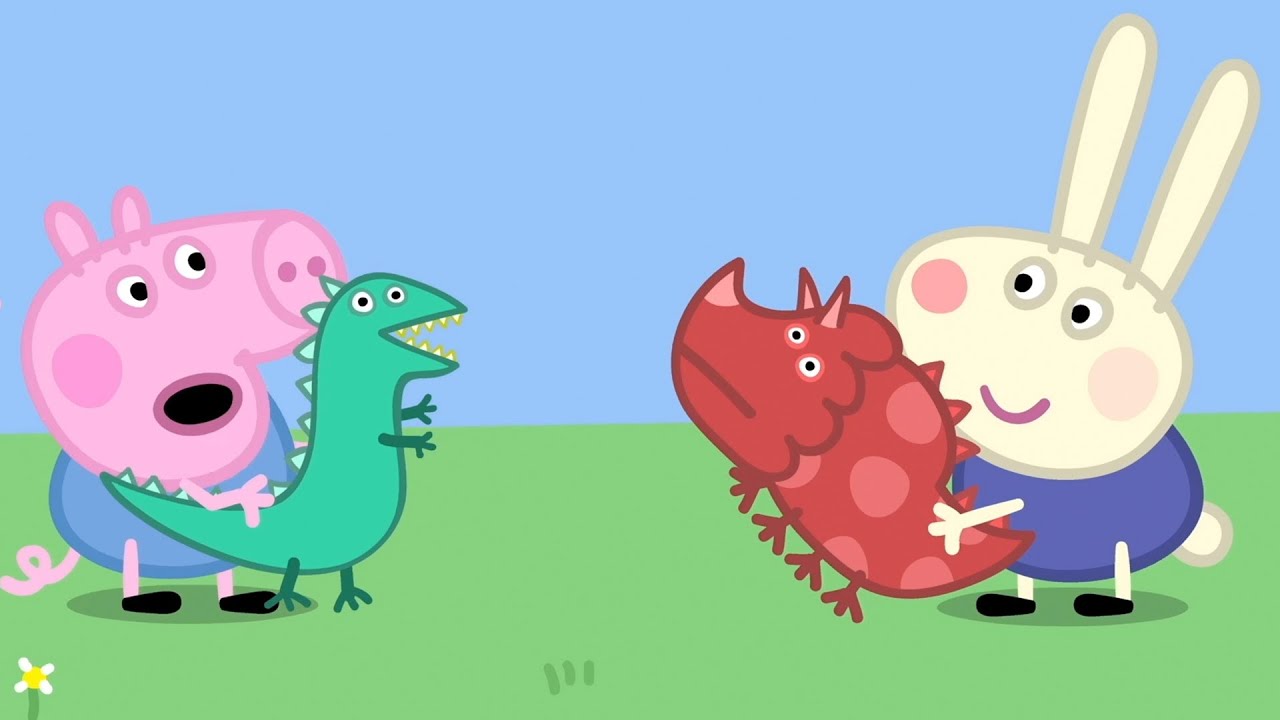
- 分享冲突:乔治和理查德各抱着恐龙不肯让,是最真实的幼儿场景,家长一看就懂。
- 沙坑合作:两个女孩引导小男孩用沙子建城堡,分步骤动作词密集出现。
- 跷跷板结局:发现跷跷板必须两个人才能玩,是这集最聪明的结局设计。
roundabout swing sand pit seesaw share sand castle together bucket dinosaur fault
一句话结论
这集最值得抓的,不是"分享"这个道理本身,而是"游乐场四种器械的名字 + 建沙堡的四个步骤 + 跷跷板必须两人才能玩的那个发现时刻"——场景词汇和情境逻辑同时进入,远比闪卡有效。
快速定位
| 维度 | 本集内容 | 对家长有什么用 |
|---|---|---|
| 核心场景 | 游乐场 + 沙坑 + 跷跷板 | 每次去公园都能对上,场景复现率极高。 |
| 核心词汇 | roundabout / swing / sand pit / seesaw / share |
游乐场五件套,孩子去一次公园就能全部用到。 |
| 核心句型 | It'll be much more fun if you share. / Playing together is fun. |
引导句 + 结论句,家长带孩子玩耍时最自然的台词。 |
| 家庭场景 | 孩子不愿分享玩具、两个小朋友一起玩、沙滩或沙池玩沙 | 三个场景在日常育儿里每周都会出现。 |
故事骨架
1. 游乐场开场:大孩子玩转盘,小孩子玩秋千
Peppa, Suzy, and Danny are on the roundabout.
Are you all ready? Ready! Then let's go! Whee! Faster! Faster!
George is a bit too little for the roundabout. He is playing on the swing.
启蒙价值:roundabout(转盘)和 swing(秋千)是游乐场最基础的两个词。a bit too little for ... 这个结构家长可以直接用:You're a bit too little for this one. Let's try the swing.
2. 两个小孩相遇:恐龙一样,但都不肯分享
George's dinosaur's just like yours. Let's go and see.
George, can Richard play with your dinosaur? No.
Richard, can George play with your dinosaur? No.
启蒙价值:just like yours(和你的一模一样)是建立共同话题最自然的方式。两个 No. 的连续出现没有被评判,只是被如实记录——这种处理方式给家长示范了怎么面对孩子拒绝分享:先观察,再引导。
3. 引导分享:姐姐们介入,道理说不通就换方法
George, it'll be much more fun if you share.
That was really nice of George.
George does not like sharing.
启蒙价值:It'll be much more fun if you share. 是说理句型里最温和的一种——不是命令,是预测。但乔治不吃这套,旁白的 George does not like sharing. 是这集最诚实的一句话。孩子听到会笑,因为那也是他们自己。
4. 沙坑时光:分步骤建城堡,意外也是游戏的一部分
First, we fill the buckets with sand.
We turn the buckets over and give them a little tap.
Richard has made a sand castle. Hey presto!
Oh dear! This game has not gone very well.
启蒙价值:First ... then ... give them a little tap 是程序性语言的完整示范,Hey presto! 是变魔术时说的感叹词,孩子第一次听到就会记住。城堡互相踩倒这个小意外,把故事节奏推向了最后的高潮。
5. 跷跷板发现:两个人才能玩的那一刻
George, what's your most favorite thing in the whole playground? Seesaw!
It is a bit difficult to play on the seesaw on your own.
Look! George and Richard are playing together! Seesaw.
启蒙价值:on your own(自己一个人)是这集的关键短语——跷跷板一个人上去就没法动,孩子自己会发现"必须两个人"。这比任何说教都有说服力。on your own 这个短语在家里可以用来描述很多场景。
原始台词精选
按故事顺序排列,挑孩子最容易接住的先说。
| 谁说的 | 原始台词 | 这句在教什么 |
|---|---|---|
| 旁白 | George is a bit too little for the roundabout. | a bit too little for ... 程度副词 + 比较 |
| Peppa | Are you all ready? Ready! Then let's go! | 准备信号句,游戏开始前最常用 |
| Rebecca | Can I come on the roundabout, too? Hop on! | Can I ...? 请求 + Hop on 上来坐 |
| Mummy Pig | George's dinosaur's just like yours. | just like yours 比较相似的方式 |
| Mummy Pig | It'll be much more fun if you share. | 条件句 + 预测,温和引导 |
| 旁白 | George does not like sharing. | 否定句,直白陈述孩子的心理 |
| Peppa | First, we fill the buckets with sand. | First 引导步骤,程序性语言 |
| Peppa | We turn the buckets over and give them a little tap. | 动作连接句,turn over + give a tap |
| Peppa | Hey presto! | 惊叹词,变魔术/成功时说 |
| Mummy Pig | It is a bit difficult to play on the seesaw on your own. | on your own 独自一人 |
| 旁白 | George likes Richard. Richard likes George. | 简单陈述句,结构对称,节奏好 |
| 旁白 | George and Richard like playing together. Seesaw. | like + doing 句型结尾,节奏感强 |
词汇语言分析
如果家长边看边带,可以按五层去抓。每一层不是"该教什么",而是"孩子最容易先接住什么"。
第一层|画面里看得到的东西
这集的游乐场画面非常完整,每个器械都有特写,沙坑里的沙桶和城堡也都清楚。
roundabout— 大圆转盘,几个孩子站在上面转swing— 秋千,乔治自己玩的那个sand pit— 沙坑,这集后半段主场景seesaw— 跷跷板,两端各一个孩子bucket— 沙桶,装沙用的sand castle— 沙堡,用翻转的沙桶做出来dinosaur— 恐龙玩具,乔治和理查德各有一个
家长怎么用:下次去公园,到每个器械旁边时说出名字。This is the swing. Do you want a go? 一次一个词,不用一次说完。
第二层|角色在做的动作
这集的动作词围绕"玩耍程序"和"建造过程",逻辑清晰,容易跟着做。
fill— 把沙子装进桶里turn over— 把桶翻过来扣在地上tap— 轻轻拍一下桶底share— 分享玩具play together— 一起玩cry— 哭,两个小男孩都哭了break— 弄坏,城堡被踩坏
家长怎么用:在沙坑或家里用沙具时,跟着说 First, fill the bucket. Then turn it over. Give it a little tap! 把步骤做成游戏指令。
第三层|嘴边的口头禅
这些话在这集里反复出现,是孩子最容易先模仿的。
Whee!— 在转盘上转的欢呼声Faster! Faster!— 越来越快时喊的Hey presto!— 城堡成功时的惊喜感叹Oh dear!— 出了问题时的叹气Good idea!— 对别人建议表示赞同Seesaw!— 乔治和理查德反复说的,是他们俩第一个共同的词
家长怎么用:做任何事成功了就说 Hey presto!,出问题了就说 Oh dear!,孩子很快会跟着用。
第四层|能直接套用的句子模板
| 模板 | 本集例句 | 换到家里 |
|---|---|---|
It'll be much more fun if ... |
It'll be much more fun if you share. | It'll be much more fun if we play together! / It'll be much more fun if we add some water. |
It is a bit difficult to ... on your own. |
It is a bit difficult to play on the seesaw on your own. | It is a bit difficult to build this on your own. / It's hard to do it on your own, isn't it? |
What's your most favorite ... in the whole ...? |
What's your most favorite thing in the whole playground? | What's your most favorite food in the whole world? |
... is just like yours. |
George's dinosaur's just like yours. | This one is just like yours! They're the same! |
家长怎么用:下次孩子不愿意分享时,试试 It'll be much more fun if you share,比直接说"分享"效果更好,因为是孩子能理解的逻辑。
第五层|一听就想学的声音
Whee!— 转盘加速时的欢叫,任何快速运动都可以用Hey presto!— 变魔术、变出来了,充满戏剧感Seesaw!— 乔治和理查德说这个词时,语气里有期待,有邀请Oh dear!— 带一种英式温和的无奈,比"哎呀"更有画面感Humm— 大人思考时发出的声音,全集出现多次
家长怎么用:Hey presto! 可以在任何"变出来了"的时刻用,比如从袋子里拿出零食、拼完一块拼图——加上这个词,普通动作立刻变得戏剧性十足。
家庭复用
这集最好用的四个时刻
| 什么时候说 | 家长说什么 | 在教什么 |
|---|---|---|
| 在公园到达每个器械时 | This is the roundabout! / This is the seesaw! Can you say it? | 器械名称,现场命名最有效 |
| 孩子不愿分享玩具时 | It'll be much more fun if you share. | 分享引导句,温和且有逻辑 |
| 在沙坑玩时 | First, fill the bucket. Now turn it over. Give it a little tap. Hey presto! | 步骤指令 + 惊叹词,沙坑必备台词 |
| 跷跷板需要伙伴时 | It's a bit difficult on your own. Do you want a friend to play with you? | on your own + 邀请句 |
进阶用法:这些话可以用一个月
| 场景 | 入门版(先用这个) | 进阶版(熟练后升级) |
|---|---|---|
| 孩子不分享 | Share, please. | It'll be much more fun if you share. Try it! |
| 玩沙建城堡 | Make a castle! | First fill the bucket, then turn it over. Give it a tap. Hey presto! |
| 跷跷板 | Come on! | It's a bit difficult on your own. Can you find a friend? |
| 两个孩子玩好了 | Good job! | Look! You're playing together! Playing together is fun! |
速览总结
如果只记一件事
下次在公园玩沙,带着孩子说:First, fill the bucket. Turn it over. Give it a little tap. Hey presto!
城堡出来的那一秒,孩子会想再说一遍。
一句步骤,一声惊叹。这一套话在任何沙坑、任何季节都能用。
锦囊建议
| 今天先做什么 | 具体动作 | 先说哪句 |
|---|---|---|
| 去公园时 | 到每个器械前停一下,说出名字 | This is the seesaw! |
| 玩沙坑时 | 说出建城堡的步骤 | First, fill the bucket! |
| 孩子想要伙伴时 | 用跷跷板逻辑解释 | It's more fun with a friend! |
相关推荐
三集覆盖"游乐场器械 → 分享合作 → 室内侦探游戏",从户外到室内,从单人到双人,主题递进自然。