 扫码点读
扫码点读
蜗牛叔叔的《小猪佩奇》英语启蒙家庭手册
104集深度教案 · 5层词汇阶梯 · 400+句型模板 · 0基础家长直接用
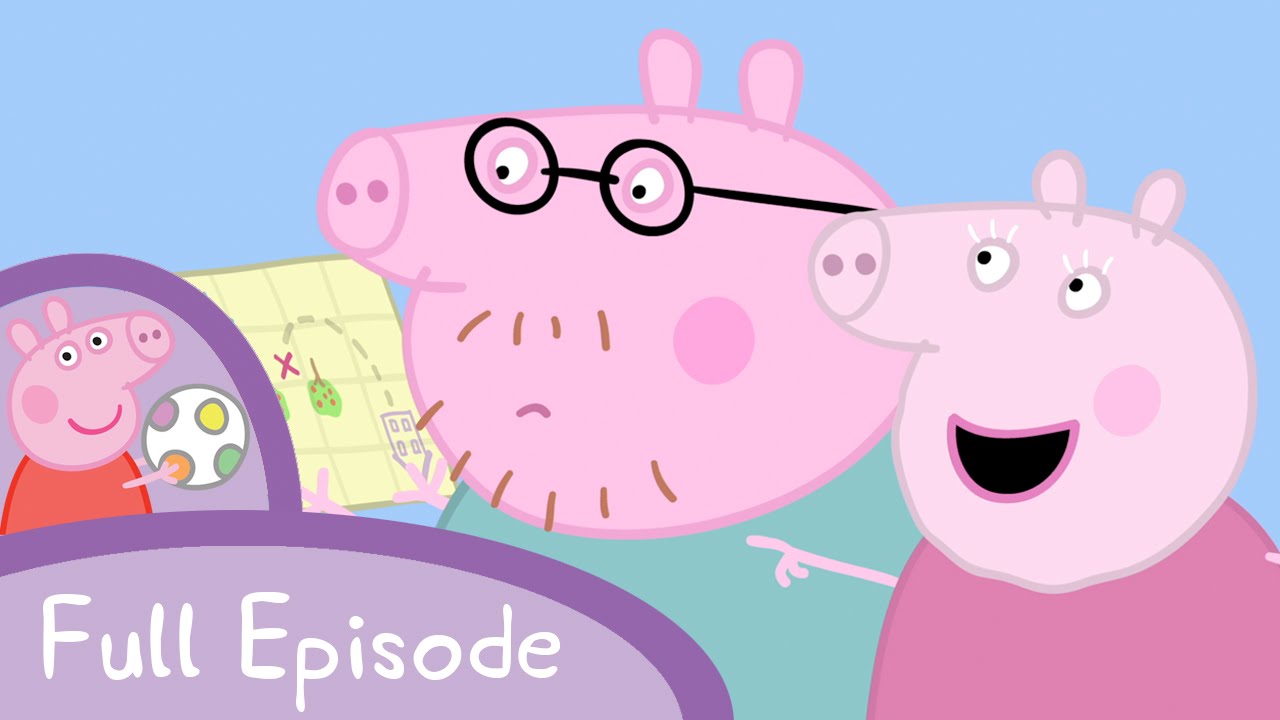
Granny Pig 和 Grandpa Pig 给 Peppa 和 George 准备了一场寻宝游戏。Granny 画了藏宝图,Grandpa 在花园里埋好了宝藏。Peppa 拿着地图、George 戴着海盗帽,全家人跟着线索一步步找:先找到瓶子里的纸条,再跟着箭头走,然后发现一把钥匙,最后在两棵苹果树中间挖出宝箱——里面是巧克力金币。这集的核心不是"找到宝藏",而是孩子怎么用英语读线索(Follow the arrows)、求助(Can you help?)、推理(So the treasure must be here),以及"一步步靠近答案"这个过程本身比结果更有价值。
总览
主题场景索引
- 准备惊喜:Granny 和 Grandpa 在孩子到之前手忙脚乱地布置,制造期待感。
- 读地图和线索:拿到藏宝图但看不懂,需要求助、讨论、推理。
- 一步步跟着走:瓶子里的纸条 → 地上的箭头 → 一把钥匙,每一步都是一个小成就。
- 找到宝藏:在苹果树中间挖出宝箱,用钥匙打开——巧克力金币,全家分享。
treasure map clue arrow key bottle garden pirate
一句话结论
这集最值得抓的,不是巧克力金币,而是Peppa 从"看不懂地图"到"自己推理出宝藏位置"的过程,以及 Daddy 拿反了地图被 Mummy 纠正时全家人笑成一团的那种轻松感——在家做寻宝游戏,这集就是最好的模板。
快速定位
| 维度 | 本集内容 | 对家长有什么用 |
|---|---|---|
| 生活场景 | 到爷爷奶奶家 → 拿到地图 → 找线索 → 开宝箱 | 适合"在家设计寻宝游戏""孩子生日派对""户外探索"的场景。 |
| 核心词汇 | treasure / map / clue / arrow / key / bottle / chest / garden |
寻宝主题词 + 花园场景词,每个词都对着一个找到的实物。 |
| 核心句型 | Can you help? / Follow the arrows! / The treasure must be here! |
一个求助,一个指令,一个推理。三句串起"遇到困难 → 跟着线索 → 得出结论"的完整思维过程。 |
| 家庭场景 | 去爷爷奶奶家、玩探索游戏、跟着指示走、发现惊喜 | 周末就能在家复刻的亲子游戏,英语自然融入。 |
故事骨架
1. Granny 和 Grandpa 手忙脚乱地准备
Granny: Grandpa Pig! Have you finished?! Peppa and George will be here soon!
Grandpa: No need to panic, Granny Pig!
Granny: Quick, Grandpa Pig! They're here!
Narrator: Grandpa Pig just finished in time!
开场就制造了紧迫感。Granny 催 Grandpa 赶紧埋好宝藏,Grandpa 还在慢悠悠地挖——这段时间差让故事一开始就有节奏感。Have you finished? 是催促的经典句式。
启蒙价值:Have you finished? 和 No need to panic 是日常对话中非常实用的一组。家长催孩子穿鞋时可以用 Have you finished?,孩子急了可以说 No need to panic——一正一反,都能用。
2. 拿到藏宝图,看不懂求助
Grandpa: Somewhere in the garden is buried treasure!
Peppa: Wow! Treasure! Where is it?
Grandpa: You have to look for it. Here's a treasure map for Peppa.
Peppa: The map is a bit difficult. Daddy, can you help?
Mummy: Daddy Pig, you're holding the map upside down!
Peppa 拿到地图但看不懂,自然地说出 Can you help?。Daddy 自信满满地说 I'm very good with maps,结果拿反了——被 Mummy 一眼看穿。这段既练了求助句型,又用幽默告诉孩子:承认不会不丢人,犯错也可以很好笑。
启蒙价值:Can you help? 是最基础的求助句。比起"我不会",用英语求助多了一步主动性。upside down(倒过来了)这个词组画面感极强,孩子看一次就记住了。
3. 跟着线索一步步找
Peppa: I can see it!
Narrator: Peppa has found the first clue. A message in a bottle.
Peppa: Oh it's a message from a pirate!
Grandpa: The pirate has clearly written, "Follow the arrows!"
Narrator: George has found the second clue! Sticks in the shape of an arrow!
三条线索一层比一层近:瓶子里的纸条 → 树枝摆成的箭头 → 一把钥匙。每找到一条线索,Granny 和 Grandpa 都说 Well done!。孩子从这个过程中学到的不只是词汇,而是"按步骤做事"和"每一步都值得被肯定"。
启蒙价值:Follow the arrows 是指令句型,在家可以用 Follow me / Follow the line。Well done 是比 Good 更具体的表扬——做到了一件事,就值得一句 Well done。
4. 推理出宝藏位置
Mummy: Maybe you should take another look at the map...
Daddy: Look, Peppa, the map has two apple trees on it.
Peppa: Here's an apple tree! And here's an apple tree! So the treasure must be here!
线索用完了,回到地图。Peppa 看到地图上画了两棵苹果树,抬头一看——花园里真有两棵苹果树。So the treasure must be here! 这句推理是整集的高光时刻。孩子第一次用"所以"串起了前面的所有线索。
启蒙价值:must be 在这里不是"必须",而是"一定是"——表达推理结论。孩子不需要学语法,只需要感受"我把线索连起来了"的成就感。以后找东西时可以说 It must be in the bedroom!。
5. 打开宝箱,全家分享
Peppa: I've got the key to open it!
Peppa: Wow! I can't believe it! Gold coins! They must be worth a fortune!
Granny: They are not gold coins, they are chocolate coins!
Narrator: Everyone loves chocolate coins.
Peppa: Granny, Grandpa, this is the best treasure hunt ever!
宝箱打开了,里面是巧克力金币。Peppa 先以为是真金币——They must be worth a fortune! 这句话的夸张让人忍不住笑。Granny 揭晓答案:不是金币,是巧克力。但巧克力比金币更好,因为全家人都能分着吃。
启蒙价值:the best ... ever 是孩子最爱用的表达夸张感受的句型。吃到好吃的说 This is the best cake ever!,玩得开心说 This is the best day ever! 一个 ever 就把情绪推到最高点。
原始台词精选
下面的台词按出场顺序排列。不用逐句教,挑孩子能接住的先用。
| 谁说的 | 原始台词 | 这句在教什么 |
|---|---|---|
| Granny | Have you finished?! Peppa and George will be here soon! | 催促 + 时间紧迫的表达 |
| Grandpa | Somewhere in the garden is buried treasure! | 用悬念开场,制造期待 |
| Peppa | Wow! Treasure! Where is it? | 最短的追问句 |
| Peppa | The map is a bit difficult. Daddy, can you help? | 承认困难 + 求助 |
| Mummy | Daddy Pig, you're holding the map upside down! | 纠正错误时的直接表达 |
| Grandpa | "Follow the arrows!" | 最清晰的指令句 |
| Peppa | Here's an apple tree! And here's an apple tree! So the treasure must be here! | 观察 + 推理 + 下结论 |
| Peppa | I've got the key to open it! | 用 I've got ... 表达"我有了" |
| Peppa | Gold coins! They must be worth a fortune! | 夸张表达惊喜 |
| Peppa | Granny, Grandpa, this is the best treasure hunt ever! | 用 the best ... ever 表达最高级赞叹 |
词汇语言分析
如果家长边看边带,可以按五层去抓。每一层不是"该教什么",而是"孩子最容易先接住什么"。
第一层|画面里看得到的东西
这集的画面围绕寻宝展开:地图、瓶子、箭头、钥匙、宝箱、巧克力金币。每样东西都是孩子可以在家复刻的道具。
treasure— 宝藏,整集的目标map— 藏宝图,Granny 画的bottle— 装着纸条的瓶子arrow— 树枝摆成的箭头,指向下一个线索key— 金色钥匙,用来开宝箱chest— 宝箱,埋在土里coin— 巧克力金币garden— 整个寻宝的场地
家长怎么用:看完动画以后在家做一个简易版寻宝。画一张"地图",藏几样小零食,沿路放"箭头"。每找到一个东西就说英语名字——Look! A bottle! / A key! / Treasure! 一次游戏练七八个词。
第二层|角色在做的动作
这集的动作链条很清晰:看地图 → 找线索 → 跟着走 → 挖宝藏 → 开宝箱。
look for— 找,寻宝的核心动作follow— 跟着箭头走find— 找到了bury— 埋宝藏dig— 挖open— 打开宝箱read— 读纸条上的字help— 帮忙
家长怎么用:在家藏东西让孩子找时说 look for it,孩子找到了说 you found it!,一起在公园里走时说 follow me。这些动作词的复用率极高,不局限于寻宝场景。
第三层|嘴边的口头禅
这些短语在"探索和发现"的场景里反复出现,都是日常能说的。
well done— 做到了一步就夸一句wow— 发现新东西时的惊叹hurray— 成功时的欢呼let's see— 打开看看look— 指给对方看come on— 催促往前走here— 在这里
家长怎么用:孩子完成任何一个小任务就说 well done,比泛泛地说"真棒"更有力。找到了什么说 look!,要看结果时说 let's see。这些词不需要教,家长自己先用起来,孩子自然跟。
第四层|能直接套用的句子模板
这集的模板句围绕"寻找和发现"展开,适合做游戏、找东西、解决问题:
| 模板 | 本集例句 | 换到家里 |
|---|---|---|
Can you help? |
Daddy, can you help? | Can you help me with my shoes? / Can you help me find it? |
Follow the ...! |
Follow the arrows! | Follow me! / Follow the path! / Follow the line! |
... must be here! |
So the treasure must be here! | My toy must be here! / The cat must be in the garden! |
This is the best ... ever! |
This is the best treasure hunt ever! | This is the best day ever! / This is the best cake ever! |
家长怎么用:Follow the ... 走路时天天用——Follow me to the car / Follow the yellow line。This is the best ... ever! 是让孩子表达开心的万能句式,吃到好吃的、收到礼物、玩得痛快,都可以说。
第五层|一听就想学的声音
Wow!— 看到宝藏时的惊叹,这集出现好几次Hurray!— 挖到宝箱时全家欢呼Ahoy there, me hearties!— Grandpa 的海盗腔,孩子特别爱模仿Ohhh...— 听到"要等一整天"时的失望Hmmm...— 看地图时的思考声
家长怎么用:玩海盗游戏时学 Grandpa 的腔调喊 Ahoy!。孩子在想办法时一起发出 Hmmm... 的声音。找到了什么一起喊 Wow! 和 Hurray!。声音是情绪的出口,模仿声音就是在模仿用英语表达情绪。
家庭复用
这集最好用的四个时刻
| 什么时候说 | 家长说什么 | 在教什么 |
|---|---|---|
| 孩子找不到东西 | Where is it? Let's look for it! | 把"找不到"变成"一起找"的探索游戏 |
| 带孩子走路 | Follow me! This way! | 方向指令,走路时天天能用 |
| 孩子想出了办法 | Well done! The answer must be here! | 肯定孩子的推理过程,不只是结果 |
| 孩子特别开心 | This is the best ... ever! | 教孩子用英语表达强烈的正面情绪 |
进阶用法:这些话可以用一个月
| 场景 | 入门版(先用这个) | 进阶版(熟练后升级) |
|---|---|---|
| 找东西 | Where is it? | Let's look for it! Follow the clues! |
| 求助 | Help! | Can you help me? The map is a bit difficult. |
| 推理 | Here! | Here's the apple tree, so the treasure must be here! |
| 表达开心 | Wow! | This is the best treasure hunt ever! |
速览总结
如果只记一件事
周末花十分钟在家做一次寻宝游戏。
画一张地图,藏三样东西,对孩子说:Follow the arrows!
找到以后一起喊:This is the best treasure hunt ever!
一次游戏比十次课堂有用。因为孩子记住的不是单词,是那个和爸爸妈妈一起找到宝藏时的兴奋。
锦囊建议
| 今天先做什么 | 具体动作 | 先说哪句 |
|---|---|---|
| 在家藏个东西 | 用纸箭头指路 | Follow the arrows! |
| 孩子找到时 | 一起欢呼 | Well done! You found it! |
| 表达感受时 | 夸张一点没关系 | This is the best day ever! |
相关推荐
接下来看什么
新手推荐路径
S1E1 → S1E2 → S1E6 → S1E15 → S1E24,五集覆盖"户外玩 → 找东西 → 上学 → 野餐 → 寻宝探索"五个基础生活场景。