 扫码点读
扫码点读
蜗牛叔叔的《小猪佩奇》英语启蒙家庭手册
104集深度教案 · 5层词汇阶梯 · 400+句型模板 · 0基础家长直接用
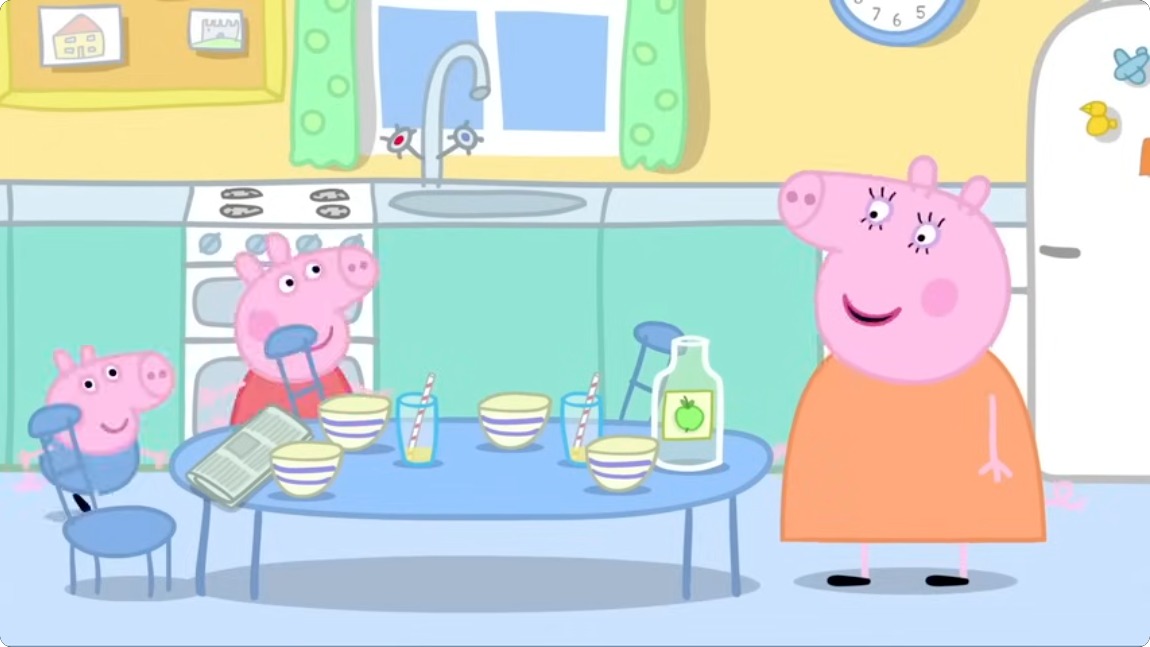
这一集讲的是全家人一起做垃圾分类回收。早餐吃完了,瓶子、罐子、报纸不能全部扔进垃圾桶——红色箱子放报纸,蓝色放锡罐,绿色放瓶子。故事没有复杂情节,只有一件事:把东西放进对的箱子。但这件简单的事情里,藏着英语启蒙最实用的分类表达和规则句型。
总览
主题场景索引
- 早餐后清理:吃完早餐,厨房里有瓶子、罐子、报纸需要处理,引出
rubbish和recycling。 - 分类规则:不同材质放不同颜色的箱子,孩子跟着大人一起学分类。
- 回收中心:开车去回收中心,把箱子里的东西倒进大桶里。
- 环保结尾:废旧物品变成新东西,完成回收的闭环。
recycling bottle can newspaper rubbish bin box
一句话结论
这集最值得抓的,不是回收本身,而是分类思维——什么东西不能扔进垃圾桶,应该放进哪个颜色的箱子,大人怎么用简单的英语把规则说清楚。
快速定位
| 维度 | 本集内容 | 对家长有什么用 |
|---|---|---|
| 核心场景 | 早餐后清理 → 分类学习 → 回收中心 → 环保闭环 | 分类是每天都发生的事,边做边说最自然。 |
| 核心词汇 | recycling / bottle / can / newspaper / rubbish / bin |
每个词都贴着家里的实物,不用翻译。 |
| 核心句型 | We don't put bottles in the rubbish bin. / Which box does it go in? |
一个是规则句,一个是提问句。两句就能撑起一整个分类游戏。 |
| 家庭场景 | 扔垃圾时、收拾厨房时、超市分类时 | 真实生活里每天都有分类的机会,随手就能说。 |
故事骨架
1. 早餐吃完了,要清理厨房
Peppa: Can we help, Mummy?
Mummy Pig: Yes, you can help me clear up.
开场就是一个"想帮忙"的情境。Peppa 主动提出帮忙,Mummy 同意了。这个一问一答是最日常的英语交互。
启蒙价值:Can we help? 是孩子在家随时都能说的一句话。不用等特殊场景,收拾桌子、叠衣服时都能开口。
2. 瓶子不能扔进垃圾桶
Mummy Pig: We don't put bottles in the rubbish bin. They can be recycled.
Peppa: What does recycled mean?
Peppa 准备把瓶子扔进垃圾桶,Mummy 拦下来解释——瓶子可以回收,不能当普通垃圾处理。recycled 这个词是孩子第一次听到,但画面上的动作很清楚。
启蒙价值:We don't put ... in the ... 是一个通用禁止句型,换掉名词就能用在任何场景——We don't put shoes on the table. / We don't put toys in the toilet.
3. 颜色分类:红的、蓝的、绿的
Daddy Pig: The red one is for newspapers, the blue one is for tin cans, and the green one is for bottles.
Peppa: Which box does it go in?
Daddy Pig 拿出三个不同颜色的回收箱,每种颜色对应一种材质。Peppa 拿起东西问"放哪个箱子",这是全集最好用的互动句型。
启蒙价值:Which box does it go in? 教孩子"分类提问"。在家整理玩具时,指着一个东西问 Which box?,孩子会主动思考分类。
4. 去回收中心,看到回收变成新东西
Narrator: Everyone loves recycling.
结尾全家开车去回收中心,把收集好的瓶子、罐子、报纸倒进大回收桶。回收不只是扔掉,而是让旧东西变成新东西。
启蒙价值:Everyone loves ...ing 是总结句式,孩子听到这个句型就知道"这件事大家都喜欢做",以后可以替换成任何活动。
原始台词精选
下面的台词按出场顺序排列。不用逐句教,挑孩子能接住的先用。
| 谁说的 | 原始台词 | 这句在教什么 |
|---|---|---|
| Peppa | Can we help, Mummy? | 主动请求帮忙 |
| Mummy Pig | Yes, you can help me clear up. | 同意 + 具体任务 |
| Mummy Pig | We don't put bottles in the rubbish bin. | 用否定句说规则 |
| Mummy Pig | They can be recycled. | 被动语态的自然输入 |
| Peppa | What does recycled mean? | 提问不认识的词 |
| Daddy Pig | The red one is for newspapers, the blue one is for tin cans, and the green one is for bottles. | 颜色 + 分类的对应表达 |
| Peppa | Which box does it go in? | 分类提问句 |
| Daddy Pig | Have you come to do some recycling? | 友好确认句 |
| Peppa | Silly me. I just love recycling. | 自嘲 + 表达喜好 |
| 旁白 | Everyone loves recycling. | 集体行动的总结句 |
词汇语言分析
如果家长边看边带,可以按五层去抓。每一层不是"该教什么",而是"孩子最容易先接住什么"。
第一层|画面里看得到的东西
这集的画面很生活化:厨房、垃圾桶、瓶子、罐子、报纸、彩色箱子。所有名词都是家里看得见的东西。
bottle— 喝完的瓶子can— 锡罐头newspaper— 报纸,爸爸在看的那张rubbish— 垃圾bin— 垃圾桶box— 回收箱,三个颜色garage— 车库,放回收箱的地方car— 开车去回收中心
家长怎么用:不翻译,只指。家里倒垃圾时指着瓶子说 bottle,指着垃圾桶说 bin。孩子先建立"物 → 词"的连接,听三四次就会自己说。
第二层|角色在做的动作
这集的动作都是家务动作——收拾、分类、扔、放、找。
collect— 收集要回收的东西clear up— 收拾,清理厨房throw— 扔,准备扔进垃圾桶recycle— 回收,整集核心动作put— 放进去,放进对应的箱子find— 找,找到该放的箱子use— 用,废旧物品可以再用
家长怎么用:边做边说。收拾桌子时说 clear up,扔东西时说 throw,放东西时说 put it in the box。家务就是最好的英语课。
第三层|嘴边的口头禅
这些是对话里的润滑剂。孩子先学会这些,对话才不会卡住。
silly me— 自己犯小错时的自嘲jolly good— 很好,英式夸奖hello— 打招呼yes— 回应bye— 再见
家长怎么用:自己先用。放错东西时说 silly me,孩子做对了时说 jolly good。语调比词汇重要,先把语气学到位。
第四层|能直接套用的句子模板
这一集有四个模板句,每个都能换词复用:
| 模板 | 本集例句 | 换到家里 |
|---|---|---|
We don't put ... in the ... |
We don't put bottles in the rubbish bin. | We don't put shoes on the sofa. / We don't put food on the floor. |
Which ... does it go in? |
Which box does it go in? | Which drawer does it go in? / Which bag does it go in? |
The ... one is for ... |
The red one is for newspapers. | The big one is for toys. / The blue one is for books. |
Can we help ...? |
Can we help, Mummy? | Can we help you cook? / Can we help clean up? |
家长怎么用:先挑 Which box does it go in? 用一周。整理玩具时指着东西问孩子,让他自己放——分类变成游戏,英语自然就跟上了。
第五层|一听就想学的声音
Hurray!— 回收成功时的欢呼Wow!— 看到回收中心时的惊叹Oh!— 发现放错时的反应Oops!— 差点扔错的意外声
家长怎么用:放错东西时一起说 Oops!,做对了一起喊 Hurray!。声音是情绪的出口,语调对了,词自然就跟上了。
家庭复用
这集最好用的四个时刻
| 什么时候说 | 家长说什么 | 在教什么 |
|---|---|---|
| 扔垃圾时 | We don't put bottles in the rubbish bin. | 分类规则,用否定句说清边界 |
| 整理东西时 | Which box does it go in? | 分类思维,让孩子自己判断 |
| 孩子想帮忙时 | Can you help me clear up? | 用英语邀请参与家务 |
| 分类完成时 | Jolly good! Everyone loves recycling! | 正向反馈,巩固行为 |
进阶用法:这些话可以用一个月
| 场景 | 入门版(先用这个) | 进阶版(熟练后升级) |
|---|---|---|
| 分类 | Which box? | Which box does it go in? The red one or the blue one? |
| 规则 | Not here. | We don't put bottles in the rubbish bin. They can be recycled. |
| 请求帮忙 | Help me! | Can you help me clear up the kitchen? |
| 夸奖 | Good! | Jolly good! You're really good at recycling! |
速览总结
如果只记一件事
下次扔垃圾时,拿起一个瓶子问孩子:Which box does it go in?
孩子放对了,说:Jolly good! Everyone loves recycling!
一个提问,一个夸奖。这两句话就能把整个分类游戏用英语撑起来。
锦囊建议
| 今天先做什么 | 具体动作 | 先说哪句 |
|---|---|---|
| 收拾厨房时 | 指着瓶子和罐子 | Bottle! Can! Newspaper! |
| 扔垃圾时 | 让孩子选箱子 | Which box does it go in? |
| 孩子想帮忙时 | 给他一个小任务 | Can you help me clear up? |
| 分类做对时 | 马上夸 | Jolly good! Well done! |
相关推荐
接下来看什么
you must ...,从分类规则过渡到出门规则,结构互补。
新手推荐路径
S1E1 → S2E53 → S2E63 → S2E65 → S1E46,五集覆盖"出门玩 → 吹泡泡 → 垃圾分类 → 交朋友 → 海滩"五个贴近日常的生活场景。