 扫码点读
扫码点读
蜗牛叔叔的《小猪佩奇》英语启蒙家庭手册
104集深度教案 · 5层词汇阶梯 · 400+句型模板 · 0基础家长直接用
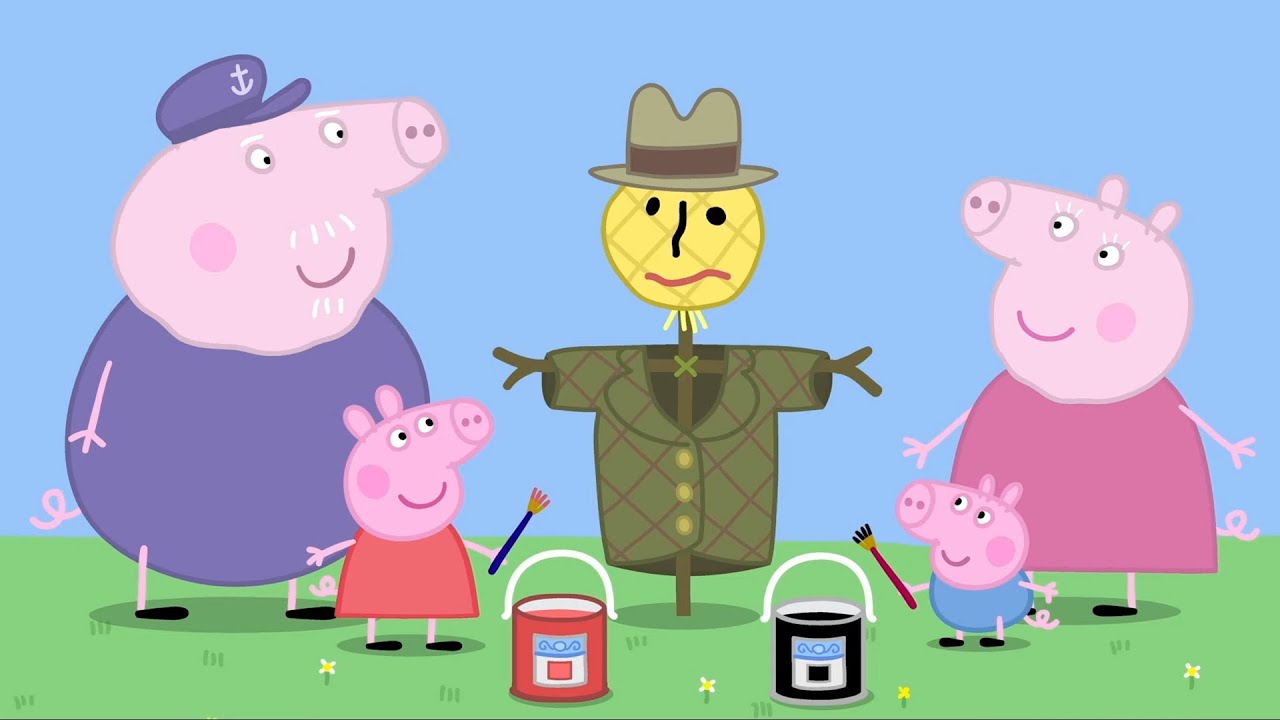
Grandpa Pig 要种花,一只小鸟一直偷吃种子。全家人一起进棚子找材料,做了一个稻草人——但小鸟又回来了。最后 Granny Pig 拿出一个喂鸟器,让小鸟有了自己的食物。这集的核心不是"怎么赶走小鸟",而是找问题、想办法、动手做、发现更好的解决方案——以及在这个过程中,孩子怎么用英语描述每一步。
总览
主题场景索引
- 种花与意外:Grandpa 播种,种子不见了,小鸟是"嫌疑人"。
- 动手做稻草人:全家进棚子找材料,用树枝、稻草、旧衣服一件件搭起来。
- 稻草人上岗:Mr Scarecrow 站在花园里,小鸟被吓跑了。
- 更好的办法:Granny Pig 拿出喂鸟器,让小鸟有自己的食物,人鸟共赢。
scarecrow seed scare straw stick string birdfeeder hungry
一句话结论
这集最值得抓的,不是稻草人本身,而是做稻草人的"一步一步":每找到一件材料,就说一句"有了这个,现在做什么"——这条动作链是孩子最容易跟住、也最容易复现到日常的语言结构。
快速定位
| 维度 | 本集内容 | 对家长有什么用 |
|---|---|---|
| 核心场景 | 种花 → 发现问题 → 做稻草人 → 解决冲突 | 四段清晰,每段有独立的动作词,可以分开用。 |
| 核心词汇 | seed / scare / stick / string / straw / coat / hat / birdfeeder |
每个词都对应画面里可以指着看的东西。 |
| 核心句型 | We'll need ... to make ... / Now, the scarecrow needs ... / There's no point ...ing |
一个说"需要什么",一个说"接下来做什么",一个说"这样没用"。三句撑起整个问题解决流程。 |
| 家庭场景 | 种植浇水、一起动手做东西、孩子想要某件东西 | 三个家里经常出现的场景,都能用这集的话接进去。 |
故事骨架
1. 种子消失了:发现问题
Grandpa Pig: The seeds have disappeared. That's strange.
Narrator: A little bird is eating Grandpa Pig's flower seeds.
Grandpa 播种,转身发现种子没了。镜头一切,小鸟正在吃。孩子比 Grandpa 先知道答案,这种"我知道大人不知道的秘密"的感觉让孩子特别投入。
启蒙价值:disappear 是一个有画面冲击力的动词——东西明明在,转眼就不见了。孩子不需要解释,看着画面就能感受到这个词的意思。
2. 赶鸟无效:Granny 给出更好的方向
Grandpa: Get off my seeds!
Granny: There's no point chasing them. They'll just come back again. You need something that scares birds away.
Grandpa 追鸟,鸟飞走了又回来。Granny Pig 一句 There's no point chasing them,直接否定了"追"这个办法,然后指向了更好的方向:做稻草人。
启蒙价值:There's no point ...ing 是否定某个行为的地道说法,比"你这样做没用"更自然。孩子反复听到这个结构,遇到类似情境会有感觉。
3. 进棚子找材料:一步一步做
Narrator: Peppa has found some sticks. George has found some string.
Narrator: We use the sticks and string to make the body.
Granny Pig has found some straw and an old sack to make the head.
这段是全集动作密度最高的部分。每找到一件材料,旁白就说一句"用这个做什么"。画面完全配合,孩子看着材料一件件变成稻草人,语言结构也同时进入记忆。
启蒙价值:We use A and B to make C 是制作句型的标准框架。孩子以后做任何手工、拼积木、搭乐高,都能用这个句式描述自己在做什么。
4. 稻草人需要脸:孩子来画
Peppa: Oh, Grandpa, Mr. Scarecrow needs a face.
Grandpa: Yes. Would you and George like to paint a face?
George paints the eyes and nose. Peppa paints the mouth.
做稻草人的最后一步,Grandpa 把"画脸"这件事交给了孩子。George 画眼睛和鼻子,Peppa 画嘴巴。这是全集里孩子参与度最高的一个时刻,也是最容易在家复现的。
启蒙价值:Would you like to ...? 是礼貌邀请的句型。Grandpa 没有直接说"你来画",而是问"你想不想来画"——这个细节值得家长注意。
5. 更好的结局:喂鸟器
Granny Pig: That's a birdfeeder. Come on, birdies! Lunchtime!
Narrator: Now, the birds have their own seeds to eat. Hooray! The little birds are happy again!
稻草人赶走了鸟,但 Granny Pig 知道鸟是饿了才来吃种子。她拿出一个喂鸟器,让鸟有自己的食物。问题不是"赶走"解决的,而是"满足需求"解决的。
启蒙价值:They must be hungry 是从行为推断需求——孩子先学到这个思维方式,再理解 hungry 这个词,比单纯背单词深多了。
原始台词精选
下面的台词按出场顺序排列。不用逐句教,挑孩子能接住的先用。
| 谁说的 | 原始台词 | 这句在教什么 |
|---|---|---|
| Grandpa | These seeds will grow into beautiful flowers. | grow into 表示"长成" |
| Grandpa | The seeds have disappeared. That's strange. | disappear + 对异常情况作反应 |
| Grandpa | So that's where all my seeds went. Into the little bird's tummy! | 用推理总结"原来如此" |
| Granny | There's no point chasing them. They'll just come back again. | There's no point ...ing 否定某个无效做法 |
| Granny | You need something that scares birds away. | something that ... 描述功能 |
| 旁白 | We use the sticks and string to make the body. | use A to make B 制作句型 |
| Peppa | Silly George! Mr. Scarecrow doesn't want to wear a dress. | 轻松否定 + 理由 |
| Grandpa | Would you and George like to paint a face? | 礼貌邀请句型 |
| Granny | Yes, they must be hungry. | 从行为推断需求 |
| Granny | Come on, birdies! Lunchtime! | 轻松口语,呼唤动物 |
词汇语言分析
如果家长边看边带,可以按五层去抓。每一层不是"该教什么",而是"孩子最容易先接住什么"。
第一层|画面里看得到的东西
这集的画面道具特别丰富:从种子到稻草人的每一个零件都能指着说。
seed— Grandpa 从袋子里倒出来的花种stick— Peppa 找来的树枝,做稻草人的身体string— George 找来的绳子,把树枝绑在一起straw— 稻草人脑袋里塞的稻草hat— George 找来的帽子coat— Peppa 找来的旧外套birdfeeder— Granny 最后拿出来的喂鸟装置
家长怎么用:做手工或收纳时指着材料说。有绳子就说 string,有树枝就说 stick,戴帽子出门说 hat。这集的材料词都是日常能碰到的。
第二层|角色在做的动作
这集动作都围绕"做东西"展开,制作类的动词是这一集的核心。
plant/drop— 播种cover— 用土盖住种子disappear— 种子不见了scare— 吓走小鸟chase— 追着鸟跑make— 做稻草人paint— 画稻草人的脸bury— 把东西插进地里
家长怎么用:画画时说 paint,做玩具时说 make,追着孩子说 I'm chasing you!,孩子把东西藏起来说 It disappeared!。
第三层|嘴边的口头禅
这集的口头禅集中在"发现异常"和"动手开始"两类。
that's strange— 奇怪,有什么不对劲get off— 走开,别碰shoo— 赶走的声音what a good idea— 真是个好主意come on— 走吧,一起来very good— 做得好(老师夸奖时用)don't worry— 别担心
家长怎么用:东西找不到说 That's strange,孩子爬上沙发说 Get off,孩子有个好主意说 What a good idea!。不用专门教,自己用起来孩子就会跟。
第四层|能直接套用的句子模板
这一集有四个模板句,每个都能换词复用:
| 模板 | 本集例句 | 换到家里 |
|---|---|---|
We use A to make B. |
We use the sticks and string to make the body. | We use paper and glue to make a card. / We use flour to make bread. |
There's no point ...ing |
There's no point chasing them. | There's no point crying. / There's no point hiding — I can see you! |
... needs ... |
Mr. Scarecrow needs a face. / The scarecrow needs something to wear. | Your teddy needs a hat. / The plant needs water. |
They must be ... |
They must be hungry. | She must be tired. / You must be thirsty — let's get some water. |
家长怎么用:... needs ... 最容易上手——孩子手里的玩具、家里的植物、甚至家庭成员,都可以用这个句型描述需求。
第五层|一听就想学的声音
这些不是词汇,是情绪。孩子最先模仿的往往就是这些声音。
Shoo! Shoo!— 赶动物走的声音,孩子特别喜欢跟着喊Hooray!— 欢呼,稻草人做好了、问题解决了都会喊Oooh!— 看到旧衣服袋子时的期待Lunchtime!— Granny 叫小鸟来吃东西,语气轻快,孩子一听就喜欢Silly George!— Peppa 嘲弄弟弟时的语气,带笑声
家长怎么用:赶鸭子或赶小动物时一起喊 Shoo!,开饭时说 Lunchtime!,孩子做了搞笑的事情说 Silly!。
家庭复用
这集最好用的四个时刻
| 什么时候说 | 家长说什么 | 在教什么 |
|---|---|---|
| 一起做手工或搭积木 | We use these blocks to make a tower! | use A to make B 制作句型 |
| 孩子反复做无效的事情 | There's no point doing that. Let's try something different. | 否定无效行为 + 引出新方向 |
| 孩子的玩具"缺"点什么 | Your robot needs eyes. Would you like to paint them? | ... needs ... + 礼貌邀请 |
| 孩子或大人明显饿了/渴了 | You must be hungry. Let's get something to eat. | 从行为推断需求 |
进阶用法:这些话可以用一个月
| 场景 | 入门版(先用这个) | 进阶版(熟练后升级) |
|---|---|---|
| 做手工 | We're making something! | We use paper and tape to make a hat. Do you want to try? |
| 否定无效做法 | That won't work. | There's no point pushing — let's try pulling instead. |
| 描述缺少的东西 | It needs something. | Your drawing needs a sun. / The soup needs a little salt. |
| 猜测别人的感受 | Are you hungry? | You must be tired. Let's sit down for a while. |
速览总结
如果只记一件事
下次和孩子一起做任何手工,哪怕只是搭积木,说一句:We use these to make a tower.
做好了一起说:Hooray! It's ready!
一个制作句,一个完成欢呼。这两句话能把每一次动手活动变成英语练习。
锦囊建议
| 今天先做什么 | 具体动作 | 先说哪句 |
|---|---|---|
| 找家里的旧材料 | 筷子 + 毛线 + 旧袜子做微型稻草人 | We need a stick. |
| 孩子做搭建游戏时 | 在旁边说一句 | We use blocks to make a tower! |
| 家里有植物时 | 一起去浇水 | The plant needs water. Let's go! |
相关推荐
grow / water / plant 词汇自然衔接。
build / climb / slide 延伸制作类词汇。
S1E10 → S2E48 → S2E62 → S2E11,四集沿着"花园种植 → 温室 → 防鸟 → 搭建"的脉络走,制作类动词和自然场景词汇逐步积累。