 扫码点读
扫码点读
蜗牛叔叔的《小猪佩奇》英语启蒙家庭手册
104集深度教案 · 5层词汇阶梯 · 400+句型模板 · 0基础家长直接用
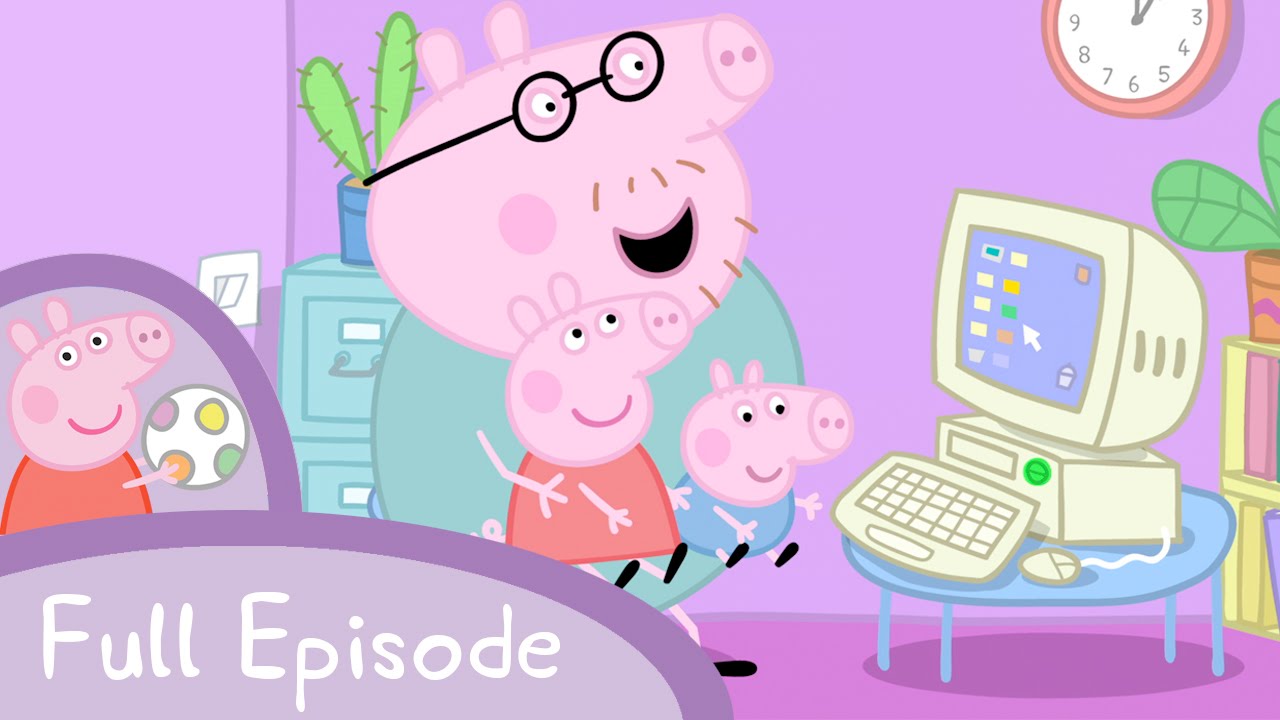
这一集讲的是猪妈妈在家用电脑工作,佩奇和乔治非要凑过去看,结果不小心把电脑弄坏了。猪爸爸被叫来修电脑,用了一个所有程序员都知道的绝招——关掉再打开。整集围绕"大人工作时怎么相处"和"犯了错以后怎么处理"展开,里面藏着请求、禁止、道歉、求助这几件孩子每天都会碰到的事。
总览
主题场景索引
- 大人工作:猪妈妈在电脑前忙,孩子想凑近,但不能打扰。
- 请求与条件:每一次请求都带着条件——可以坐旁边,但要安静;可以玩游戏,但要等工作完。
- 犯错与道歉:佩奇碰了电脑,电脑坏了,她说了
Sorry。 - 修理与帮忙:猪爸爸修电脑,用最简单的方法解决了问题。
computer work lunch game mend touch sorry switch
一句话结论
这集最值得抓的,不是电脑坏了怎么修,而是孩子怎么在大人忙的时候提请求,以及当事情搞砸了以后,怎么用 Sorry 和 I was just ... 来解释自己并不是故意的。
快速定位
| 维度 | 本集内容 | 对家长有什么用 |
|---|---|---|
| 居家场景 | 工作 → 请求 → 犯错 → 修理 → 游戏 | 家长在家办公时,这集的对话可以直接用。 |
| 核心词汇 | computer / work / touch / mend / switch / game / lunch / sorry |
每个词都对应孩子在家能看到的东西或动作。 |
| 核心句型 | Can we ...? / You mustn't ... / I was just showing ... |
一个是请求,一个是禁止,一个是解释。三句覆盖日常冲突的全流程。 |
| 家庭场景 | 大人工作时、孩子犯错时、东西坏了时 | 三个高频场景,句句都能在家复现。 |
故事骨架
1. 猪妈妈在工作,孩子想去看
Peppa: Daddy? Can we go and watch Mummy on her computer?
Daddy: Yes, as long as you don't disturb her. She has a lot of important work to do today.
佩奇先问爸爸,爸爸没有直接说"不行",而是给了一个条件:as long as you don't disturb her——只要不打扰她就行。这种"可以,但是"的回答方式,比直接拒绝聪明得多。
启蒙价值:as long as 是一个带条件的同意,跟 S1E1 里 If you jump in muddy puddles, you must wear your boots 是一个路子——规则不是"不许",而是"可以,只要你做到另一件事"。
2. 从看到想参与,请求步步升级
Peppa: Mummy? Can we play that computer game, "Happy Mrs. Chicken"?
Mummy: We can play "Happy Mrs. Chicken" later. But now I have to work.
Peppa: Mummy? Can we help you work?
佩奇连续发出三个请求:先是"能不能坐你腿上看",然后是"能不能玩游戏",最后是"能不能帮你干活"。每次被温柔地拒绝,她就换一个角度再问。猪妈妈的回应也很有层次:later 表示不是不可以,只是现在不行。
启蒙价值:孩子听到三轮 Can we ...? 和三种不同的回应,不知不觉就学会了"请求被拒绝以后可以换一种方式再试",也学会了 later 这个非常好用的缓冲词。
3. 佩奇碰了电脑,出事了
Mummy: No, Peppa! You mustn't touch the computer.
Peppa: Yes, George. You mustn't do this.
Mummy: Peppa, stop!
Peppa: Sorry, Mummy. I was just showing George what not to do.
这段是整集最经典的桥段。猪妈妈说不许碰电脑,佩奇为了"给乔治示范什么不能做",结果自己碰了。她的解释 I was just showing George what not to do 非常妙——孩子用大人的逻辑反过来辩解。
启蒙价值:You mustn't ... 是最明确的禁止句,比 Don't 更正式。而 I was just ...ing 是解释自己行为的标准句型,孩子学会以后可以用来说明意图。
4. 猪爸爸来修电脑
Mummy: Daddy Pig, can you mend the computer?
Daddy: Err... Right you are, Mummy Pig, but I'm not very good with these things...
Daddy: Um. Maybe if I just switch it off... And then switch it on again...
旁白: Daddy Pig has mended the computer!
猪爸爸嘴上说"我不太擅长这些",实际上用了全世界通用的修电脑方法——关了再开。这个反差制造了笑点,也让孩子看到"承认自己不擅长"不是丢脸的事。
启蒙价值:switch off 和 switch on 是一对反义词组,在家里开灯关灯、开电视关电视都能用。I'm not very good with these things 是一种谦虚的表达,孩子以后遇到不会做的事可以这样说。
5. 电脑修好了,终于可以玩游戏
Peppa: Daddy? Can we play that computer game, "Happy Mrs. Chicken"?
Daddy: Maybe you should ask Mummy Pig.
Peppa: Mummy said that we could play it later.
Daddy: Well, that's okay, then.
佩奇记住了妈妈之前说的 later,现在妈妈不在了,她精准地引用 Mummy said that we could play it later 来说服爸爸。猪妈妈回来发现大家都在玩游戏,那句 Well, I see that the computer is working again 里带着一点无奈和好笑。
启蒙价值:佩奇用的是间接引语——"妈妈说过可以"。孩子学到的是怎么用 Mummy said ... 来转述别人的话,这在日常生活中出现频率极高。
原始台词精选
下面的台词按出场顺序排列。不用逐句教,挑孩子能接住的先用。
| 谁说的 | 原始台词 | 这句在教什么 |
|---|---|---|
| Daddy | Yes, as long as you don't disturb her. | 带条件的同意,"只要……就行" |
| 旁白 | Mummy Pig has a lot of important work to do. | 用 a lot of 和 important 描述事情多又重要 |
| Peppa | Mummy? Can George and I sit on your lap and watch you work? | 用复合请求一次问两件事 |
| Mummy | We can play "Happy Mrs. Chicken" later. But now I have to work. | 用 later 推迟而不是拒绝 |
| Mummy | No, Peppa! You mustn't touch the computer. | 最明确的禁止指令 |
| Peppa | Sorry, Mummy. I was just showing George what not to do. | 道歉 + 解释意图 |
| Mummy | Oh, dear. The computer is not meant to do that. | 委婉描述"坏了"——它不该这样 |
| Daddy | I'm not very good with these things. | 承认不擅长某事的谦虚说法 |
| Daddy | Maybe if I just switch it off... and then switch it on again. | 用 switch off/on 描述开关动作 |
| Peppa | Mummy said that we could play it later. | 用间接引语转述别人说过的话 |
词汇语言分析
如果家长边看边带,可以按五层去抓。每一层不是"该教什么",而是"孩子最容易先接住什么"。
第一层|画面里看得到的东西
这集的画面集中在家里两个空间:猪妈妈的电脑桌前和厨房。电脑是贯穿全集的核心物件。
computer— 猪妈妈面前的台式电脑,全集围绕它转lunch— 猪爸爸在厨房做的汤soup— 锅里煮着的午饭lap— 猪妈妈的膝盖,佩奇和乔治坐上去disc— 装游戏的光盘,佩奇找出来的game— Happy Mrs. Chicken,佩奇心心念念的电脑游戏newspaper— 猪爸爸可能正在看的东西
家长怎么用:在家用电脑或手机时,指着屏幕说 computer。做饭时指着锅说 soup / lunch。孩子爬到你腿上时说 sit on my lap。这些词每天都有出现的机会。
第二层|角色在做的动作
这集的动作不是跑跳那种大幅度运动,而是日常小动作——碰、按、开、关。
work— 猪妈妈在电脑前工作watch— 佩奇和乔治坐着看妈妈工作touch— 碰电脑,被禁止的那个动作mend— 修理,猪爸爸修电脑switch off— 关掉电脑switch on— 打开电脑finish— 完成(做完午饭、做完工作)play— 玩游戏
家长怎么用:开灯时说 switch on,关灯时说 switch off。孩子伸手碰不该碰的东西时说 Don't touch。东西坏了时说 Can you mend it?。这些动作词贴着生活走,不用专门记。
第三层|嘴边的口头禅
这集的口头禅集中在"打扰——被拒绝——道歉——解决"的对话链上。
sorry— 做错事以后第一句话oh dear— 发现事情不对劲时的叹气err— 犹豫不决的时候发出的声音right you are— 猪爸爸同意帮忙时说的,表示"好吧"yippee— 找到游戏光盘时的欢呼hurray— 电脑修好时的庆祝well— 填充停顿,表示在想
家长怎么用:孩子做错事时不急着批评,先等他说 sorry。出了小状况时自己先叹一声 oh dear。别人请你帮忙时说 right you are。这些小词让英语对话不生硬。
第四层|能直接套用的句子模板
这一集有四个模板句,每个都能换词复用:
| 模板 | 本集例句 | 换到家里 |
|---|---|---|
Can we ...? |
Can we play that computer game? | Can we watch a cartoon? / Can we have a snack? |
You mustn't ... |
You mustn't touch the computer. | You mustn't run near the road. / You mustn't eat with dirty hands. |
I was just ...ing |
I was just showing George what not to do. | I was just looking at it. / I was just trying to help. |
... said that we could ... |
Mummy said that we could play it later. | Daddy said that we could go to the park. / Teacher said that we could bring toys. |
家长怎么用:You mustn't ... 是家里最需要的禁止句。比 Don't 更正式,孩子听多了会感受到"这件事是认真的"。I was just ...ing 让孩子学会解释而不是对抗——做错事以后能说清楚自己的意图,沟通就顺畅多了。
第五层|一听就想学的声音
这些不是词汇,是情绪的声音标记。孩子最先跟着学的就是这些。
Yippee!— 找到游戏光盘时的尖叫Hurray!— 电脑修好时的欢呼Err...— 猪爸爸不确定能不能修好时的犹豫声Hmm.— 猪爸爸盯着电脑思考时发出的声音Oh, dear!— 猪妈妈发现电脑坏了时的叹气
家长怎么用:遇到难题时叹一声 Hmm,解决了以后喊一声 Hurray。犹豫的时候说 Err...。把这些声音融进日常,孩子就会觉得说英语是一件自然的事。
家庭复用
这集最好用的四个时刻
| 什么时候说 | 家长说什么 | 在教什么 |
|---|---|---|
| 大人在忙,孩子想参与 | You can sit here, as long as you stay quiet. | 用附带条件的同意代替简单拒绝 |
| 孩子碰不该碰的东西 | You mustn't touch that. | 用正式禁止句设立明确边界 |
| 孩子做错事想解释 | I was just trying to help.(引导孩子说) | 教孩子用英语说明意图而不是只说"不是我" |
| 开灯关灯、开电视关电视 | Switch it on. / Switch it off. | 一对反义词组,每天练几十次 |
进阶用法:这些话可以用一个月
| 场景 | 入门版(先用这个) | 进阶版(熟练后升级) |
|---|---|---|
| 请求 | Can we play? | Can we play that game? Mummy said we could play it later. |
| 禁止 | Don't touch! | You mustn't touch that. It's not for children. |
| 道歉 | Sorry. | Sorry, I was just trying to help. I didn't mean to break it. |
| 开关 | On! Off! | Can you switch off the light? Now switch it on again. |
速览总结
如果只记一件事
下次孩子做错事了,别急着批评。等他说完 Sorry,再问一句:What were you doing?
引导他回答:I was just trying to ...
一个道歉,一个解释。孩子学到的不只是英语,还有"犯了错可以说清楚"这件事。
锦囊建议
| 今天先做什么 | 具体动作 | 先说哪句 |
|---|---|---|
| 忙的时候试条件句 | 孩子凑过来时自然地说 | You can watch, but sit quietly. |
| 练开关 | 拿台灯或手电筒反复按 | Switch on! Switch off! |
| 孩子犯错时用起来 | 引导他说出意图 | Sorry. I was just ... |
相关推荐
接下来看什么
You mustn't 互相补充。
I'm not very good with ... 可以连着用。
新手推荐路径
S1E1(出门玩) → S1E2(找东西) → S1E5(捉迷藏) → S1E7(大人工作) → S1E8(兄妹互动)